
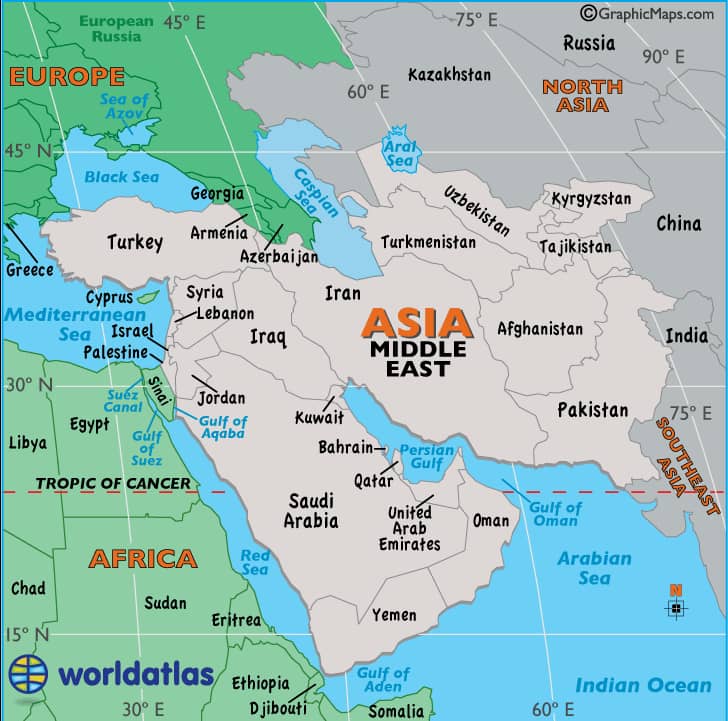
The military confrontation involving the United States, Israel, and Iran represents one of the most consequential geopolitical developments of the twenty-first century. Although the immediate conflict is rooted in longstanding disputes over Iran's nuclear programme, regional influence, ballistic missile capabilities, and support for allied non-state actors, its implications extend far beyond the borders of the Middle East. The conflict has reshaped global security calculations, disrupted energy markets, heightened tensions across strategic maritime corridors, and reinforced the interconnected nature of international politics. It has also demonstrated that modern conflicts can rapidly generate global economic and security consequences, affecting regions that are geographically distant from the battlefield.
The rivalry between the United States, Israel, and Iran has evolved over several decades through a combination of diplomatic confrontations, economic sanctions, proxy conflicts, cyber warfare, intelligence operations, and military deterrence. While the United States and Israel have consistently maintained that Iran's expanding nuclear programme and missile capabilities constitute significant threats to regional and international security, Iran has argued that its military posture is designed primarily to safeguard its sovereignty and deter external aggression. The resulting strategic competition has produced repeated cycles of escalation, demonstrating how unresolved political disputes can evolve into broader regional crises with global implications.
Unlike conventional interstate wars of the past, this conflict illustrates the changing character of warfare in the modern era. Military operations are no longer confined to conventional battlefields but increasingly involve precision-guided strikes, cyber-attacks, drone warfare, satellite intelligence, electronic surveillance, economic sanctions, strategic communication, and information operations. Modern conflicts are fought simultaneously in physical, digital, economic, and diplomatic domains. This transformation underscores the importance of technological superiority, intelligence gathering, and strategic coordination as essential elements of contemporary national security.
The Middle East continues to occupy a central position in global geopolitics because of its vast energy resources, strategic waterways, and geographic location linking Asia, Africa, and Europe. The region contains some of the world's largest oil and natural gas reserves while controlling critical maritime chokepoints such as the Strait of Hormuz and the Bab el-Mandeb, through which a substantial proportion of global energy supplies and commercial trade pass daily. Consequently, instability in the region immediately reverberates across international markets, driving fluctuations in oil prices, increasing transportation costs, disrupting supply chains, and contributing to inflationary pressures worldwide. The conflict therefore reinforces the reality that regional security and global economic stability have become inseparable.
Although Africa is geographically removed from the principal theatre of conflict, it remains highly vulnerable to its indirect consequences. It is imperative to stress that many African economies depend heavily on imported petroleum products, fertilizers, machinery, industrial inputs, and food commodities whose prices are closely linked to developments in global energy markets. Escalating conflict in the Middle East often results in higher fuel prices, increased transportation costs, rising inflation, and additional fiscal pressures on already fragile economies. While oil exporting countries such as Nigeria, Algeria, Angola, and Libya may temporarily benefit from higher crude oil prices, history demonstrates that such windfall revenues rarely translate into sustainable economic transformation without prudent fiscal management, economic diversification, and institutional accountability.
The conflict also highlights the growing importance of maritime security for African states. The Red Sea, the Gulf of Aden, and the Suez Canal remain indispensable arteries for global commerce and African trade. Any disruption to shipping routes through these waterways affects imports, exports, food security, energy supplies, and industrial production across the continent. This reality underscores the urgent need for African governments to strengthen naval capabilities, improve maritime domain awareness, enhance intelligence-sharing mechanisms, modernize port security infrastructure, and deepen regional cooperation against piracy, terrorism, and transnational organized crime. The successful implementation of the African Continental Free Trade Area (AfCFTA) equally depends on secure maritime trade routes capable of supporting uninterrupted commercial activities.
Another significant lesson arising from the conflict concerns the importance of strategic autonomy in foreign policy. The emerging international order is increasingly characterized by competition among major powers seeking influence across different regions of the world. African countries must therefore avoid excessive dependence on any single external actor and instead pursue balanced diplomatic engagement based on clearly defined national interests. Strategic autonomy does not imply political neutrality or isolation; rather, it requires the ability of sovereign states to formulate independent policies that advance national development, protect territorial integrity, and preserve diplomatic flexibility in an increasingly polarized international environment.
Perhaps one of the most profound lessons from the conflict is the central role of intelligence in modern security management. Successful military operations increasingly depend upon timely intelligence, surveillance, reconnaissance, cyber capabilities, satellite imagery, artificial intelligence, and real-time information analysis. Intelligence has become the foundation upon which effective military planning, national security decision-making, and counterterrorism operations are built. African governments must therefore invest significantly in strengthening intelligence institutions, integrating technological innovations into national security frameworks, enhancing inter-agency cooperation, and developing indigenous capacities in cyber security and digital surveillance. Reactive military responses alone can no longer provide adequate protection against contemporary security threats.
For the Middle East itself, the conflict once again demonstrates that military superiority alone cannot produce sustainable peace. Decades of armed confrontations have repeatedly shown that even the most sophisticated military capabilities cannot permanently resolve disputes rooted in political exclusion, ideological rivalry, sectarian divisions, historical grievances, and competing security perceptions. Military operations may produce tactical victories, but lasting peace requires inclusive political dialogue, confidence-building measures, diplomatic engagement, economic cooperation, and mutual recognition of legitimate security concerns. Sustainable stability can only emerge through comprehensive political settlements rather than continuous cycles of military escalation.
The crisis equally exposes the limitations of existing regional security mechanisms. Organizations such as the Gulf Cooperation Council, the Arab League, and the Organisation of Islamic Cooperation possess considerable potential to facilitate preventive diplomacy, confidence-building, mediation, and regional conflict management. However, their effectiveness depends upon stronger political commitment among member states, improved institutional capacity, and collective willingness to prioritize dialogue over confrontation. The absence of effective regional security architecture often allows localized disputes to escalate into broader geopolitical crises with international consequences.
Equally important is the humanitarian dimension of the conflict. Modern wars impose devastating consequences upon civilian populations through displacement, destruction of infrastructure, disruption of healthcare systems, food insecurity, economic hardship, and long-term psychological trauma. Compliance with international humanitarian law, including the protection of civilians and civilian infrastructure, remains essential regardless of the strategic objectives pursued by parties to armed conflict. The international community must therefore continue supporting diplomatic initiatives, humanitarian assistance, and reconstruction efforts aimed at reducing human suffering while encouraging peaceful conflict resolution.
For Nigeria, the conflict presents several strategic lessons with direct relevance to national security planning. As Africa's most populous country and one of the continent's leading security actors, Nigeria must strengthen intelligence-led policing, modernize its armed forces through technological innovation, expand indigenous defence manufacturing, enhance cyber security capabilities, improve border surveillance systems, and invest in space-based intelligence and drone technologies. Equally important is the need to accelerate economic diversification in order to reduce vulnerability to fluctuations in global energy markets. National security should no longer be viewed solely through the lens of military capability but also as a function of economic resilience, technological advancement, institutional effectiveness, and sound governance.
The conflict also reinforces the reality that the future of warfare will increasingly be defined by artificial intelligence, autonomous weapon systems, cyber operations, electronic warfare, precision-guided munitions, information manipulation, economic sanctions, and strategic communication. Nations that fail to modernize their defence institutions and invest in emerging technologies risk falling behind in an era where technological superiority often determines strategic advantage. African governments must therefore prioritize innovation, research and development, professional military education, and strategic partnerships capable of enhancing indigenous technological capabilities.
Ultimately, the U.S.-Israeli war on Iran serves as a powerful reminder that security in today's interconnected world extends far beyond national borders. Regional conflicts now generate global political, economic, and humanitarian consequences within remarkably short periods. For Africa, the crisis offers an opportunity to reassess national security priorities, strengthen regional cooperation, invest in preventive diplomacy, modernize defence institutions, and promote economic resilience. For the Middle East, it underscores the urgent necessity of replacing cycles of confrontation with sustainable political dialogue, regional cooperation, and inclusive diplomacy. The enduring lesson is that while military power remains an indispensable instrument of national defence, lasting peace can only be achieved through capable institutions, effective governance, mutual respect, adherence to international law, and a genuine commitment to diplomatic engagement. As the international system becomes increasingly complex and interconnected, these principles will remain fundamental to both regional stability and global peace.
About the Author
Dr. Capt. Luqman Gidado (Rtd) is a security and strategic affairs analyst, retired Nigerian Army officer, researcher, and public policy commentator with extensive experience in defence, counterterrorism, peace and security, and international relations. He holds a Ph.D. in Security and Strategic Studies and has served in various military and strategic roles, including operational deployments in Nigeria's counterinsurgency theatre and multinational peace support environments. Dr. Gidado is the Executive Director of ZAN Multi Concept Limited. He has facilitated numerous capacity-building programmes for security agencies, government institutions, and civil society organisations on security governance, conflict prevention, leadership, and strategic management. A regular television and radio commentator, Captain. Luqman Gidado contributes informed perspectives on national security, defence policy, regional stability, civil-military relations, intelligence, terrorism, and international affairs. His research and publications focus on contemporary security challenges, governance, strategic leadership, and conflict resolution. He is committed to advancing evidence-based public policy and strengthening institutional approaches to peace, security, and sustainable development across Africa and beyond.